
Surgical Technologist Prerequisites and Admission Requirements
Published - February 5, 2026

Table of Contents
The U.S. Bureau of Labor Statistics projects 5% job growth for surgical assistants and technologists between 2024 and 2034, faster than the average for all occupations, with a median annual wage of $62,830 as of May 2024. For a career that takes under two years to train for, that combination of pay and demand draws a steady stream of applicants. Before you enroll, you need to know what the role requires of you on the way in.
Surgical technologist prerequisites fall into two groups. The first covers what you need to gain admission to a surgical technology program: a diploma, certain coursework, and a set of application materials. The second covers what happens after you enroll, finishing an accredited program so you can sit for national certification. This page walks through both.
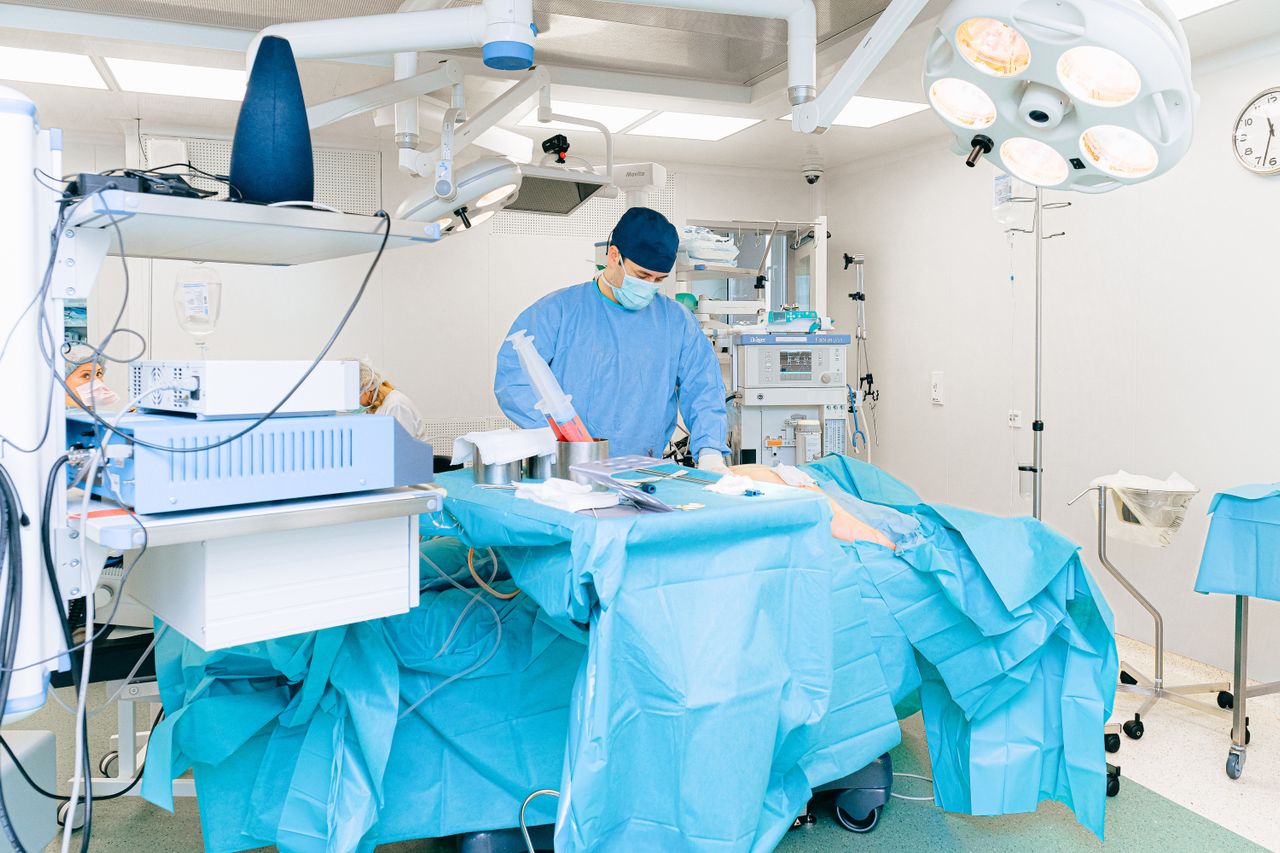
What Are Surgical Technologist Prerequisites?
Prerequisites are the conditions you must meet before a school admits you and, later, before a certifying body lets you test. Most program admission prerequisites are straightforward: proof of secondary education, a few foundational courses, and standard health and background documentation.
The larger requirement sits one step beyond admission. To earn the field’s recognized credential, you must graduate from a program accredited by either the Commission on Accreditation of Allied Health Education Programs (CAAHEP) or the Accrediting Bureau of Health Education Schools (ABHES). CBD College’s surgical technology program holds ABHES accreditation, which makes its graduates eligible to sit for certification. Choosing an accredited program is the single prerequisite that determines whether your education leads to a credential at all.
Common Admission Requirements for Surgical Technology Programs
Admission requirements vary by school, but most surgical technology programs ask for the same core items.
Education Baseline
A high school diploma or GED is the minimum. Surgical technology is built on science fundamentals, so admissions teams want evidence you can handle college-level coursework in anatomy and medical terminology.
Prerequisite Coursework
Some programs require or recommend coursework in anatomy and physiology, medical terminology, biology, and basic math before you start the core curriculum. Others fold these subjects into the program itself. Confirm which model your school follows, since it affects your start date and total timeline.
Application Materials
Most programs request a predictable set of documents:
| Requirement | Purpose |
| Official transcripts | Verify your education baseline |
| Entrance assessment or interview | Gauge readiness and fit |
| Immunization and health records | Meet clinical site safety rules |
| Background check | Required for hospital and OR placement |
| CPR certification | Standard for clinical rotations |
Clinical sites set many of these conditions, not the school. Hospitals will not place a student in an operating room without a background check and current immunizations, so programs collect them up front.
Program Format
Format shapes how the prerequisites play out day to day. CBD College runs a hybrid Surgical Technology program structured as an 18-month Associate of Applied Science degree, with day or evening class options. If you are weighing a degree against a shorter credential, the comparison of diploma programs and degrees is worth reading before you apply.
How Long Does It Take to Become a Surgical Tech?
Most surgical technology programs run 12 to 24 months, depending on whether you pursue a diploma or an associate degree. CBD College’s Associate of Applied Science takes 18 months from start to graduation.
The timeline breaks into three phases. Classroom and didactic instruction builds the cognitive foundation: aseptic technique, instrument identification, surgical anatomy, and pharmacology. Mock operating room labs let you practice sterile setup and instrument handling before you touch a real case. Finally, a clinical externship places you in a working surgical environment, where you apply everything under supervision. The clinical externship guide explains what that final phase looks like.
That under-two-years path is part of what makes the field attractive. Compared with nursing or a four-year degree, surgical technology moves you from enrollment to a credentialed role quickly.

Surgical Technologist Certification: The NBSTSA Pathway
Graduating from an accredited program makes you eligible to sit for the Certified Surgical Technologist (CST) exam, administered by the National Board of Surgical Technology and Surgical Assisting (NBSTSA). The CST is the most widely recognized surgical technology credential in the United States.
Eligibility runs through your program. The NBSTSA requires candidates to graduate from a recognized surgical technology program before testing. The exam covers perioperative care, surgical specialties, anatomy and physiology, and equipment and technology. Once you pass, the credential requires renewal every four years through continuing education or retesting.
Certification is not legally mandated in every state, but most employers expect it, and the BLS notes that opportunities are strongest for technologists who hold it. Two resources cover the process in depth: the surgical tech certification guide and the step-by-step look at how to become certified.
Skills and Traits That Support Success
Prerequisites get you in the door. Certain traits help you finish the program and thrive in the OR. Surgical procedures can run for hours, so physical stamina and the ability to stay focused on your feet matter. Attention to detail is non-negotiable when you are responsible for sterile fields and instrument counts. Composure under pressure and clear communication round out the profile, since you work as one part of a coordinated surgical team.
None of these are admission requirements. They are worth an honest self-assessment before you commit, because they predict how well the day-to-day work will suit you.
Career Outlook After Certification
The numbers behind the field stay strong. The BLS projects about 8,700 openings per year for surgical assistants and technologists through 2034, driven by an aging population and the growth of outpatient surgery centers. Hospitals employ the largest share, followed by outpatient care centers and physicians’ offices.
Certified surgical technologists work in hospitals, ambulatory surgery centers, operating rooms, and outpatient facilities. For a fuller picture of pay and advancement, see the surgical technologist salary guide and the breakdown of the jobs outlook.
Start Your Surgical Technology Education
If you have researched the prerequisites and the role fits what you want, the next step is an application. CBD College’s ABHES-accredited Surgical Technology program prepares you for the CST exam in 18 months, with hands-on mock OR training and clinical externships built in. Visit the surgical technology program page to review start dates and request information from an admissions advisor.

