
MRI Safety: Key Risks, Contraindications & What Every MRI Tech Should Know
Published - April 30, 2026

Table of Contents
MRI safety is the set of practices that protect patients and staff from the hazards of a powerful, always-on magnetic field. Because the magnet never switches off, safety depends on controlling exactly what enters the room and screening every patient before they reach the scanner. The stakes are real: near a strong magnet, a small ferromagnetic object like a hairpin can become a projectile traveling up to 40 miles per hour.
For anyone training to become an MRI technologist, safety is the foundation of the job. This guide covers the key risks, the contraindications, the ACR safety zones and screening process, and how MRI safety differs from CT.
Why MRI Safety Is Different: The Magnet Is Always On
The single most important fact about MRI safety is that the magnetic field is always present, even when no scan is running and the system appears idle. This sets MRI apart from X-ray and CT, where radiation exists only during active exposure.
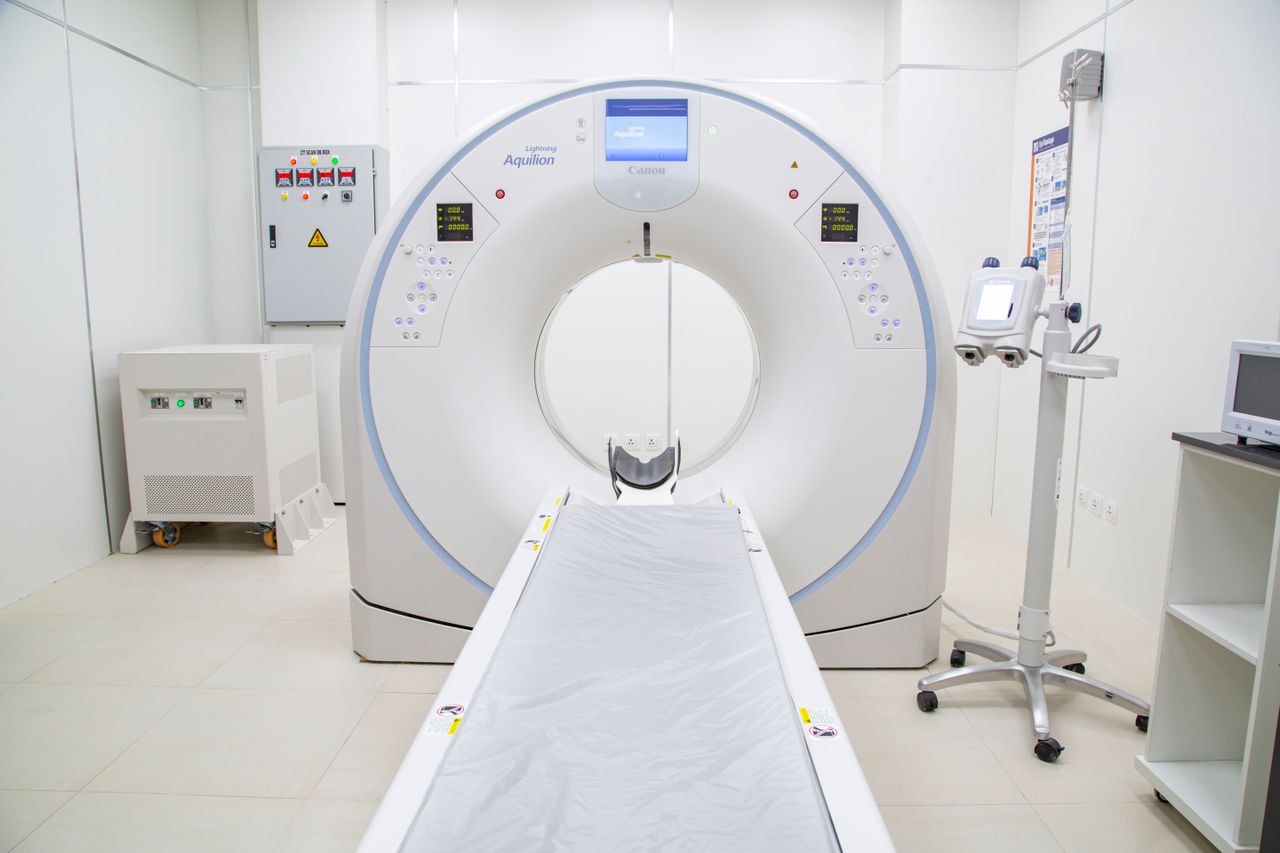
An MRI scanner produces three types of fields, each with its own risks. The static magnetic field is the constant, powerful magnet responsible for projectile hazards and implant displacement. The radiofrequency (RF) field, used to generate the image signal, can cause tissue heating. The gradient fields, which switch rapidly to encode spatial information, can stimulate nerves and produce the loud knocking noise MRI is known for. Understanding these three fields explains nearly every safety rule that follows. CBD College’s MRI program trains for exactly this kind of work.
Key MRI Safety Risks
MRI hazards fall into a handful of well-defined categories.
The projectile effect, sometimes called the missile effect, is the most dramatic. The static field can pull ferromagnetic objects toward the bore at high speed. Documented hazards include oxygen tanks, IV poles, wheelchairs, scissors, keys, and tools, anything ferromagnetic that has not been screened out.
Implant displacement or malfunction is the second major risk. The magnetic field can move, twist, or heat certain implants, or interfere with electronic devices like pacemakers and infusion pumps.
RF heating can raise the temperature of tissue and of metallic implants during a scan, creating a burn risk. Acoustic noise from the gradient coils is loud enough to require hearing protection for every patient. And a cryogen quench, the rapid release of the supercooled helium that maintains the magnet, is a rare but serious emergency that displaces oxygen in the room.
MRI Contraindications
MRI contraindications are the conditions and devices that make scanning unsafe, either absolutely or under specific conditions. They are managed through a device safety classification system: MR Safe (no known hazards), MR Conditional (safe only under specified conditions), and MR Unsafe (poses a hazard). A guiding rule governs the entire field: any implant or device whose status cannot be confirmed is treated as MR Unsafe until proven otherwise.
Contraindications divide into two groups.
| Category | Examples | Tech Action |
| Absolute | Certain older ferromagnetic aneurysm clips, some older pacemakers and ICDs | Do not scan unless verified safe; treat unknown as unsafe |
| Relative | Many implants and devices, metallic foreign bodies, claustrophobia, pregnancy considerations | Verify device conditions, screen thoroughly, scan only if conditions are met |
It is worth noting that many modern cardiac devices are now MR Conditional and can be scanned safely when the manufacturer’s specified conditions are met. The technologist’s job is to verify those conditions before the patient ever enters the scan room, not to assume.
The ACR Safety Zones
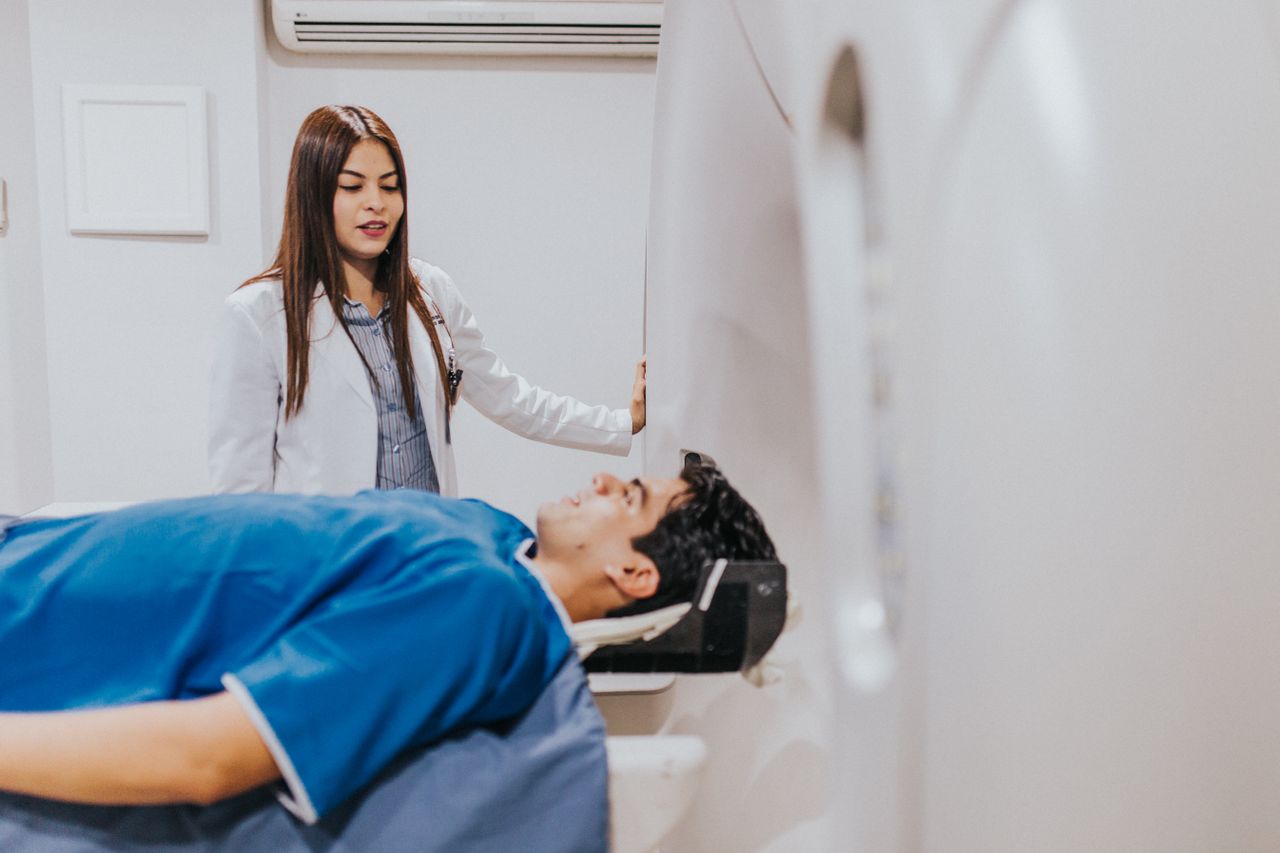
To control the environment, the American College of Radiology defines four safety zones, each with increasing magnetic field exposure and tighter access. The 2024 update to the ACR Manual on MR Safety refined these definitions, including the projectile area within the innermost zone.
| Zone | Access | Purpose |
| Zone I | Open to the public | General areas outside MR control |
| Zone II | Supervised | Patient screening and interview buffer |
| Zone III | Restricted, badge-controlled | Controlled access; only screened individuals |
| Zone IV | Highly restricted | The scanner room itself, where the magnet is |
Zone II is where screening happens, the buffer between the public areas and the magnetic field. Zones III and IV can only be entered after screening and with permission, since this is where the field is strong enough to turn objects into projectiles or affect implants.
Patient Screening: The Tech’s First Job
Screening is the single most important safety activity in MRI, and it falls primarily to the technologist. Before any patient enters Zone III, they complete a written MRI safety questionnaire, which the tech then reviews verbally, question by question. This catches implants, metallic foreign bodies, prior surgeries, and other risks before the patient is anywhere near the magnet.
For any implant, the tech verifies its MR safety classification against manufacturer documentation. Ferromagnetic detection systems can serve as an added safeguard at the entry to the scanner area, but they supplement careful screening rather than replace it. The firmest rule in MRI: no one enters Zone III unscreened, not even in an emergency, because by the time someone reaches the magnet, it is too late to discover a hidden hazard.
MRI Tech vs CT Tech: How the Roles Differ
People exploring imaging careers often weigh MRI tech vs CT tech, and the difference comes down to the technology and its safety priorities.
| Factor | MRI Tech | CT Tech |
| Technology | Magnetic fields and radio waves | Ionizing radiation (X-rays) |
| Radiation | None | Yes, dose management required |
| Primary safety focus | Projectiles, implants, the magnet | Radiation dose and shielding |
| Best for imaging | Soft tissue, brain, spine, joints | Bone, chest, trauma, fast scans |
Both roles operate advanced scanners, position patients, and work under the radiologic technology umbrella, and both typically certify through the ARRT. The defining difference is that CT safety centers on managing radiation dose, while MRI safety centers on the magnetic field, which is why screening and the zone system are so central to the MRI tech’s role.
How to Become an MRI Tech
Entering the field starts with an accredited program, usually an associate degree. CBD College’s MRI program follows the ARRT Primary Pathway and can be completed in about 17 to 18 months, with classroom instruction, simulation labs, and clinical externships. Graduates pursue ARRT certification for the R.T.(MR) credential, the recognized standard for the role. For the practical details, see how long an MRI technician program takes and what an MRI tech salary looks like.
Start Your MRI Career
If working at the center of advanced imaging appeals to you, mastering MRI safety is part of what makes the role so respected. CBD College’s MRI program prepares you with the technical skill and safety knowledge the job demands, built around hands-on training and real clinical experience. Visit the MRI program page to review start dates and request information.

