
Occupational Therapist Education Requirements: Degrees, Prerequisites & How Long It Takes
Published - September 21, 2026

Table of Contents
Occupational therapist education requirements come down to four steps: a bachelor’s degree, a graduate degree from a program accredited by the Accreditation Council for Occupational Therapy Education (ACOTE), a passing score on the national certification exam, and a state license. The graduate degree is a master’s degree at the typical entry level, and the U.S. Bureau of Labor Statistics (BLS) reports that these programs usually take two to three years and include supervised fieldwork, which ACOTE sets at a minimum of 24 weeks full time for Level II. Counting a four-year bachelor’s degree, most students spend six to seven years in school after high school before they can apply for a license.

Degree Required to Become an Occupational Therapist
A master’s or a doctoral degree from an ACOTE-accredited program qualifies a graduate to become an occupational therapist (OT). ACOTE’s current standards apply to both entry-level master’s (OTM) and entry-level doctoral (OTD) students, and the fieldwork rules are the same for each. The National Board for Certification in Occupational Therapy (NBCOT) requires only that a candidate graduate with an entry-level occupational therapy degree from an ACOTE-accredited program. It does not favor one degree over the other.
The BLS lists a master’s degree as the typical entry-level education for the occupation. A doctorate adds time and cost in exchange for additional coursework and preparation for research, teaching, or leadership roles. The trade-offs are covered in CBD College’s comparison of a doctorate versus master’s in occupational therapy. For a student whose goal is clinical practice, the master’s route reaches licensure sooner.
What the Degree Must Include
Every accredited OT program combines didactic coursework, Level I fieldwork, and Level II fieldwork. Coursework covers anatomy, kinesiology, neuroscience, occupational science, assessment, intervention planning, and practice across the lifespan. CBD’s Master of Occupational Therapy (MOT) is a hybrid program delivered over 23.5 months in Los Angeles, with online didactic content, on-campus labs, and externships in clinical settings.
Occupational Therapy Prerequisites
Occupational therapy prerequisites include a bachelor’s degree, a set of undergraduate science and social science courses, and, at many programs, documented observation hours with a practicing OT. The bachelor’s degree can be in any major as long as the applicant completes the prerequisite courses. Kinesiology, psychology, biology, and health science are common undergraduate paths, but a liberal arts graduate who completes the science sequence is equally eligible.
Prerequisite course lists vary by program, so applicants should check each school’s requirements before enrolling in coursework. Courses that appear across most OT program requirements include:
- Human anatomy and human physiology, often with labs
- Introductory and abnormal or developmental psychology
- Statistics
- Sociology or anthropology
- Medical terminology
Many programs set a minimum undergraduate grade point average (GPA), a minimum grade in each prerequisite course, and a time limit on how old science coursework can be. Letters of recommendation, a personal statement, and observation hours in one or more OT settings round out a typical application. Prospective MOT students should confirm the current prerequisite list with CBD College admissions before applying. CBD’s guide on how to become an occupational therapist walks through the application steps in order.
Prerequisites for Occupational Therapy Assistants Moving to OT
An occupational therapy assistant (OTA) who wants to become an OT follows the same path as any other applicant: a bachelor’s degree, the prerequisite courses, and an accredited graduate program. OTA coursework and clinical hours strengthen an application, but an associate degree alone does not meet graduate admission requirements. OTAs with a bachelor’s degree can apply directly; those without one need to complete it first.
How Long Does It Take to Become an Occupational Therapist?
It takes six to seven years of post-secondary education to become an occupational therapist: four years for a bachelor’s degree, then two to three years in a master’s or doctoral program. The certification exam and state license add weeks to months after graduation.
| Stage | Typical Duration | Notes |
|---|---|---|
| Bachelor’s degree | 4 years | Any major, plus prerequisite courses |
| Master’s or doctoral OT program | 2 to 3 years | Includes Level I and Level II fieldwork |
| Level II fieldwork (within program) | 24 weeks minimum, full time | ACOTE requirement for OTM and OTD students |
| NBCOT exam | After graduation | Required for the OTR credential |
| California license application | 3 to 4 weeks processing | Applies after exam passage |
Program length drives most of the variation. A master’s program such as CBD’s MOT runs 23.5 months, while doctoral programs sit at the longer end of the two-to-three-year range. Students who complete prerequisites during their bachelor’s degree avoid an extra semester or year of post-baccalaureate coursework. The reasons students choose the shorter route are laid out in CBD’s post on why pursue a master’s in occupational therapy.
Fieldwork and Clinical Hours
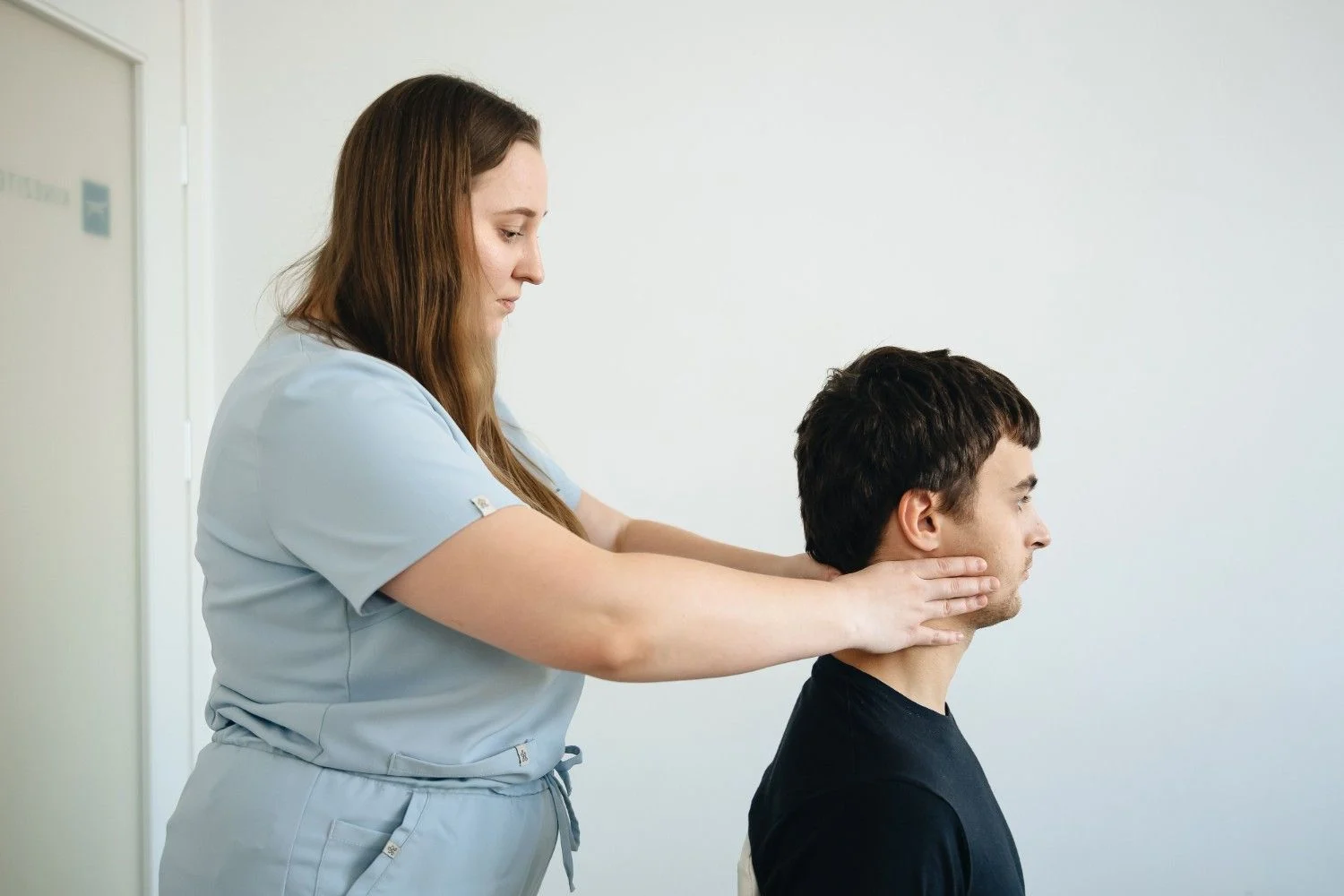
Fieldwork is the supervised clinical training built into every accredited OT program, divided into Level I and Level II. Level I fieldwork runs alongside coursework and introduces students to clients and settings through observation and limited participation. ACOTE requires written agreements between the program and each site from the onset to the conclusion of Level I placements.
Level II fieldwork is full-time clinical practice under a licensed OT. ACOTE requires OTM and OTD students to complete Level II for a minimum of 24 weeks full time, and the placements must reflect more than one practice area or be spread across no more than four settings. Students rotate through hospitals, outpatient clinics, schools, skilled nursing facilities, and mental health programs. CBD’s overview of occupational therapy settings describes the daily work in each environment.
NBCOT Exam and State Licensure
After graduation, candidates pass the NBCOT certification exam to earn the Occupational Therapist Registered (OTR) credential and then apply for a license in the state where they plan to practice. The BLS confirms that all states require occupational therapists to be licensed and that passing the qualifying exam is required to use the OTR title.
NBCOT Eligibility
U.S.-educated candidates qualify for the OTR exam once they graduate with an entry-level occupational therapy degree from an ACOTE-accredited program. Graduates of programs still in the accreditation pipeline should watch their program’s status closely. CBD’s MOT holds Preaccreditation Status and must complete an on-site evaluation and be granted Accreditation Status before its graduates can sit for the exam.
California Licensure
The California Board of Occupational Therapy (CBOT) licenses OTs in the state. Applicants submit an application with a $50 application fee, complete fingerprinting through Live Scan or fingerprint cards (a $49 fee applies to cards only), and wait three to four weeks for processing. Once licensed, OTs renew every two years and complete 24 professional development units (PDUs) per renewal period. At least 12 of those PDUs must relate directly to the delivery of occupational therapy services, and up to six excess PDUs carry over to the next cycle.
Cost and Salary Context
Occupational therapists earned a median annual wage of $100,330 in May 2025, or $48.24 per hour, based on BLS data. The BLS projects employment to grow 15 percent from 2025 to 2035, which it describes as much faster than the average for all occupations, adding about 25,200 jobs.
California’s outlook runs ahead of the national figure. State projections published through O*NET OnLine show OT employment in California rising from 13,500 in 2024 to 17,100 in 2034, a 27 percent increase with roughly 1,080 openings per year. Graduate tuition varies widely by institution and degree, and the extra year of a doctorate adds both tuition and a year of forgone income. Federal aid, institutional awards, and professional association scholarships can offset part of the cost; CBD’s roundup of scholarships for aspiring occupational therapists lists options to pursue before enrolling.
Start Your Master of Occupational Therapy at CBD College
Bachelor’s graduates and OTAs who are ready to move toward the OTR credential can enroll in CBD’s Master of Occupational Therapy program in Los Angeles. The hybrid format pairs online coursework with on-campus labs and clinical externships, and the 23.5-month schedule reaches graduation in just under two years. Review the admission requirements on the program page, confirm the current prerequisite list with an admissions advisor, and request information to start an application.

