
Ultrasound Technician vs. Sonographer: Is There Actually a Difference?
Published - October 28, 2026

Ultrasound technician and sonographer are two names for the same job: both titles describe someone who performs ultrasound exams and captures the images a physician reads. Sonographer is the word used by the credentialing registry, by program accreditors, and in the name of the degree itself. Ultrasound tech is the word patients use and the one many hospitals put in job postings. CBD College’s own catalog lists the graduate job title as “Diagnostic Medical Sonographer/Ultrasound Technician,” which shows how interchangeable the two are.
The one place the correct job title matters most is for credentials. Registered Diagnostic Medical Sonographer (RDMS) is a credential you earn, and this post covers how you earn it. CBD College’s Associate of Applied Science in Diagnostic Medical Sonography trains you for the job under either name.
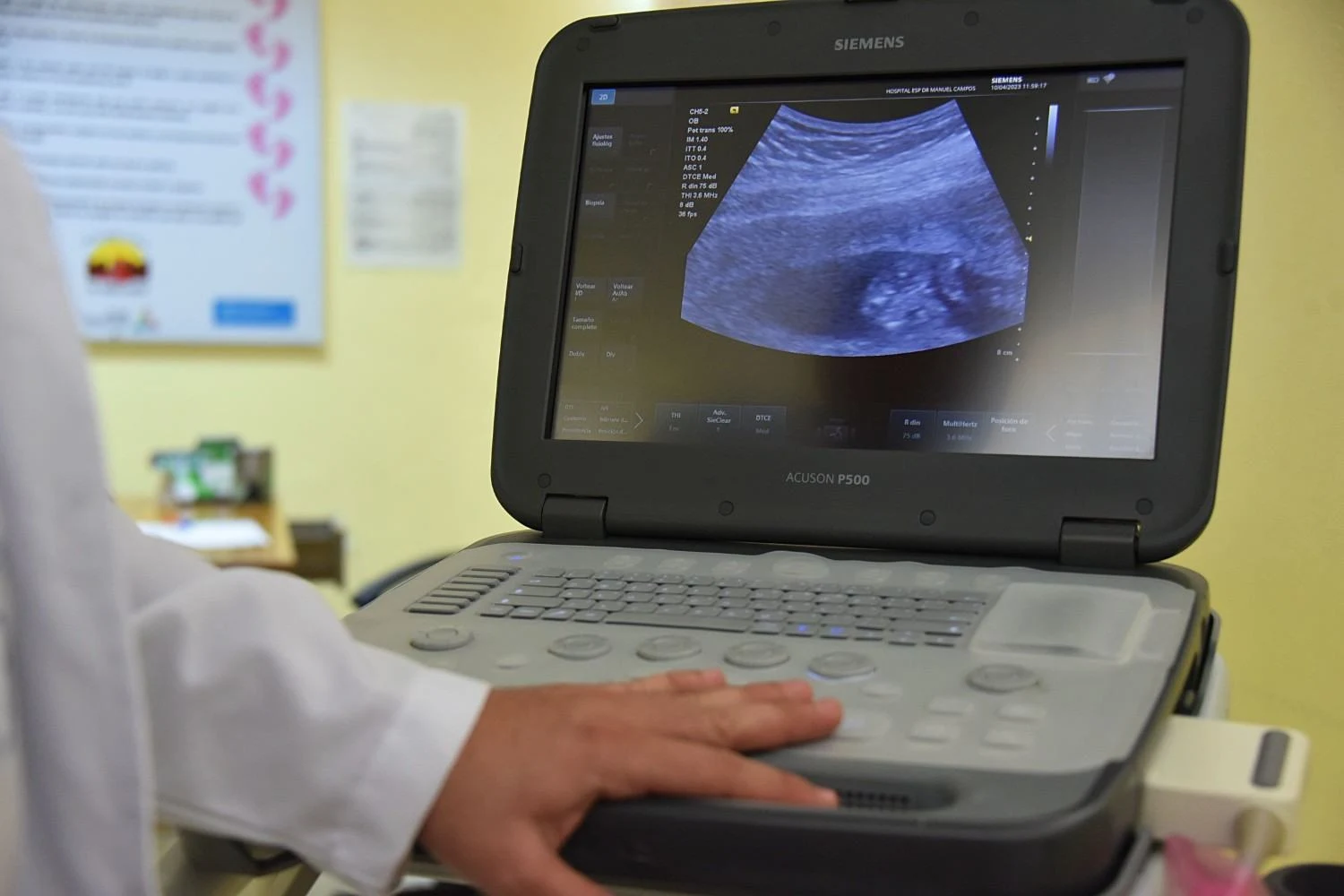
Why “Sonographer” Is the Credentialed Name for CBD College’s Diagnostic Medical Sonography Graduates
Sonographer is the title used by the American Registry for Diagnostic Medical Sonography (ARDMS), by the accreditor of CBD College’s program, and in the name of the degree CBD College awards, so it is the title that appears on your credential card, your resume, and the HR record where an employer logs your registry status.
ARDMS tests and registers sonographers. Pass its exams, and you hold the RDMS credential. CBD College’s DMS program is accredited by the Commission on Accreditation of Allied Health Education Programs (CAAHEP) on the recommendation of the Joint Review Committee on Education in Diagnostic Medical Sonography. Programmatic accreditation means working sonographers and sonography educators reviewed the curriculum and found it meets the diagnostic medical sonography profession’s standards.
Use the term “ultrasound tech” when you talk with patients, family, or anyone outside the field, and when you scan job boards, since many hospitals list the role that way.
What the Title Difference Means When CBD College DMS Graduates Search for Jobs
Search for both terms when you job hunt, because employers post the same role as ultrasound technologist, ultrasound tech, and diagnostic medical sonographer. The federal government counts it as one occupation, Diagnostic Medical Sonographer (SOC code 29-2032), and that is the code CBD College’s catalog lists for its DMS graduates.
The wording usually hints at what the hiring manager cares about most. Postings that say sonographer more often spell out a required registry, such as RDMS or RVT. Postings that say ultrasound tech more often lead with the setting, the shift, and the exam volume. Read the requirements line either way.
CBD College’s catalog names the settings its DMS graduates are prepared to work in: hospitals and medical centers, medical clinics, radiology imaging centers, physician offices, mobile ultrasound services, freelance work, and travel sonography assignments.
How You Qualify for CBD College’s Diagnostic Medical Sonography Program
To apply to CBD College’s DMS program, you must be at least 17, have a high school diploma or equivalent, pass CBD College’s entrance assessments, and complete our diagnostic medical sonography program’s selection process.
- Age 17 or older with a high school diploma, GED, or a foreign education recognized as equivalent
- A Wonderlic SLE score of 17, plus WAST scores of 1300 in Language and 1300 in Math (applicants with a bachelor’s degree from an accredited school skip the WAST)
- Review by the Prospective Student Evaluation Team, which awards selection points from your assessment scores and your evaluation, then ranks applicants for each cohort
- Before clinical placement: health screenings, immunizations, and current BLS CPR certification; some clinical sites also require drug and alcohol testing
Do you need healthcare experience?
No healthcare work or educational experience is needed to enroll in CBD College’s diagnostic medical sonography program. We admit up to 30 students per lab shift, with morning and afternoon shifts available. Our admissions team can walk through how your background fits the selection process.
What CBD College’s Diagnostic Medical Sonography Program Includes
CBD College’s DMS program is a 120-quarter-credit Associate of Applied Science that runs 77 weeks and ends with 880 hours of supervised clinical practicum. Total time can vary with school holidays and breaks.
The program runs in seven modules.
- Module 1 covers general education: college math, written and oral communication, physics, anatomy and physiology, and medical terminology.
- Modules 2 through 5 cover vascular imaging, abdominal and small parts imaging, obstetrics and gynecology imaging, patient care, and the physics and instrumentation of ultrasound, each paired with a hands-on sonography lab.
- Modules 6 and 7 are the two clinical practicums at a hospital, clinic, or imaging center, under a supervising sonographer or physician and the school’s clinical coordinator.
CBD College’s Diagnostic Medical Sonography degree concentrates in abdominal sonography. You take the two ARDMS exams that earn RDMS in Abdomen while you are still enrolled, each with its own exam-prep course: the Sonography Principles and Instrumentation (SPI) exam during Module 6 and the Abdomen (AB) specialty exam during Module 7.
Lab training uses working ultrasound machines, a SonoSim simulator, curvilinear, linear, and endovaginal transducers, and obstetric phantoms, so you have scanned on real equipment before your first clinical day.
Why CBD College’s DMS Program Uses a Blended Format
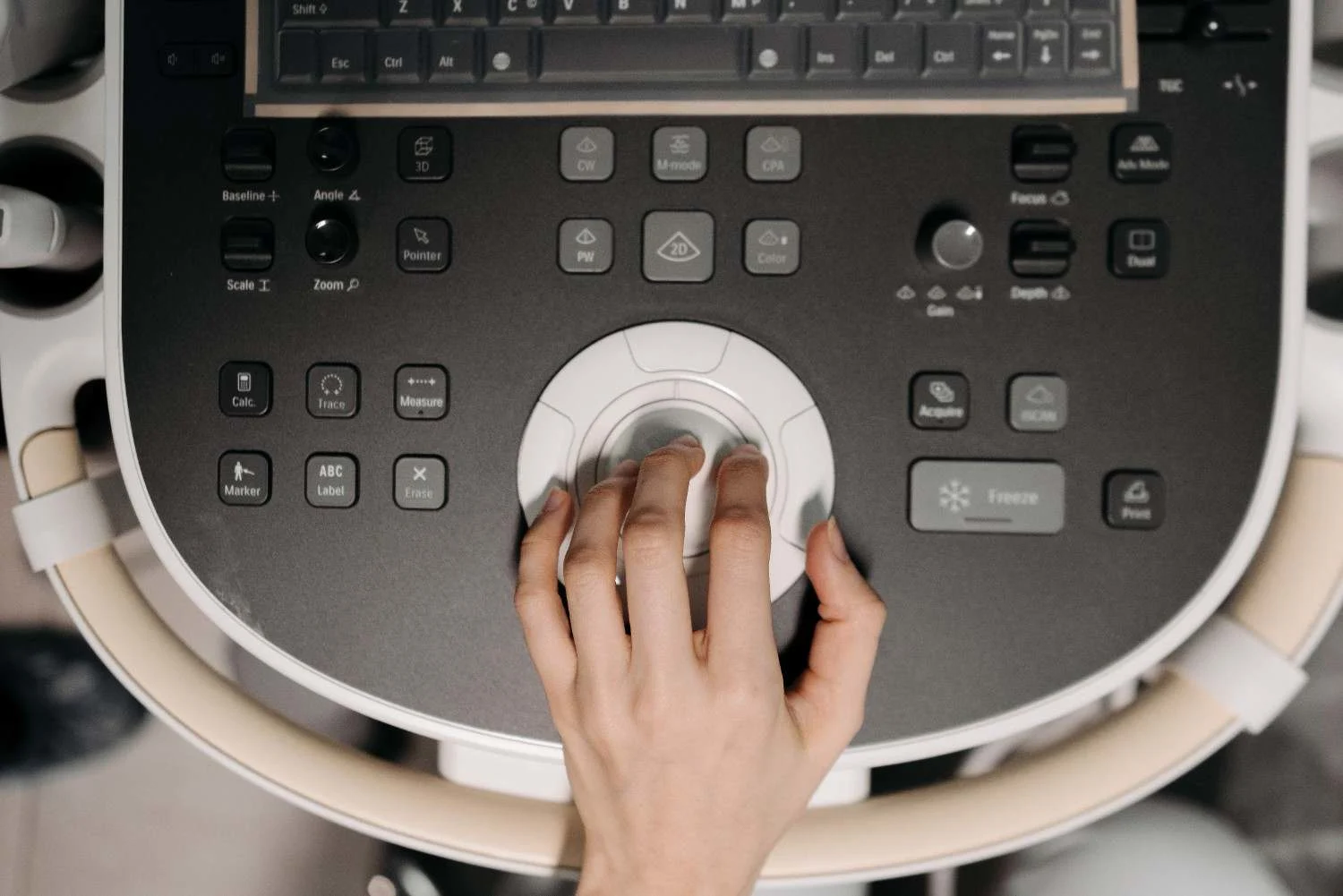
CBD College delivers the DMS program in a blended format so lecture coursework fits around work and family while labs and clinicals are in person, because you need to use equipment and practice on people.
The online portion of our program covers the lecture courses:
- general education
- the imaging theory courses
- ultrasound physics
- patient care
- exam-prep courses.
The in-person portion of our DMS program covers the three sonography labs at CBD College’s campus on Wilshire Boulevard in Los Angeles and the two clinical practicums at hospitals, clinics, and imaging centers.
In practice, that means fewer campus days during the lecture-heavy modules and full days on site once clinicals begin. CBD College admissions can walk through what a week looks like in each module.
Ultrasound Technician vs. Sonographer: Questions CBD College Students Ask
Is a sonographer a radiologic technologist?
A sonographer and a radiologic technologist hold different credentials and run different equipment, though both are imaging jobs. Radiologic technologists work with X-ray, CT, and MRI and register through the American Registry of Radiologic Technologists (ARRT). Sonographers work with ultrasound and register through ARDMS. [Link: Sonography vs. Radiology: Which Imaging Career Is Right for You?]
Do you need a license to work as an ultrasound tech in California?
California treats sonography certification as voluntary, and most employers prefer or require ARDMS or ARRT credentials. CBD College’s program meets California’s educational requirements for that voluntary certification. For any other state, CBD College admissions can help you check that state’s rules before you enroll.
Does earning RDMS change your job title?
Earning RDMS adds the credential after your name, and your employer sets the job title. On a resume, “RDMS (AB)” tells a hiring manager you passed both registry exams in abdominal sonography and keep the registration current.
What about “ultrasound technologist” and “vascular technologist”?
Ultrasound technologist describes the same job as ultrasound technician and sonographer. Vascular technologist is a specialty within sonography with its own ARDMS credential, the RVT, earned through the vascular technology exam. [Link: What Does a Vascular Sonographer Do? Duties, Credentials & Salary.]
Train to become a Diagnostic medical sonographer/ultrasound tech at CBD College
No matter the title, it is one job, and CBD College’s Diagnostic Medical Sonography program is how you provides you with the training to prepare you to enter the field. You graduate ready to perform ultrasound exams, work with physicians on the images you capture, and hold the RDMS credential employers look for. Talk with CBD College admissions about the next cohort, or learn more about the Diagnostic Medical Sonography program.

