
Pediatric Occupational Therapy: Careers, Settings & How an OTA Supports Kids
Published - April 13, 2026

Table of Contents
Pediatric occupational therapy helps children build the everyday skills they need to function at home, in school, and with friends, addressing developmental, sensory, motor, and cognitive challenges. Occupational therapy assistants (OTAs) play a hands-on role in delivering that care, and they work in a field with strong demand: the U.S. Bureau of Labor Statistics reports a median wage of $68,340 for OTAs as of May 2024, with employment projected to grow about 19% through 2034, much faster than average.
This guide covers what pediatric occupational therapy is, the settings where it happens, who OTAs help, and how to enter the field.
What Is Pediatric Occupational Therapy?
Pediatric occupational therapy is a specialty focused on helping children develop the physical, cognitive, and social abilities they need for daily life. It differs from general occupational therapy by addressing children’s developmental stages as their brains and bodies grow, which is why occupational therapy for kids looks different from therapy designed for adults.
The work centers on a few core areas: fine and gross motor skills, sensory processing, self-care and daily living, and social and emotional regulation. Therapists address conditions such as developmental delays, autism, sensory processing disorders, and physical or learning challenges, whether temporary or permanent. CBD College’s occupational therapy assistant program trains practitioners who deliver this care, and this overview of occupational therapy assistant duties covers the broader role.

What a Pediatric OTA Does
To understand the pediatric OTA role, it helps to know how the occupational therapy team works. The occupational therapist (OT) evaluates each child and designs the treatment plan. The occupational therapy assistant (OTA) delivers that plan hands-on, running therapy sessions and tracking the child’s progress.
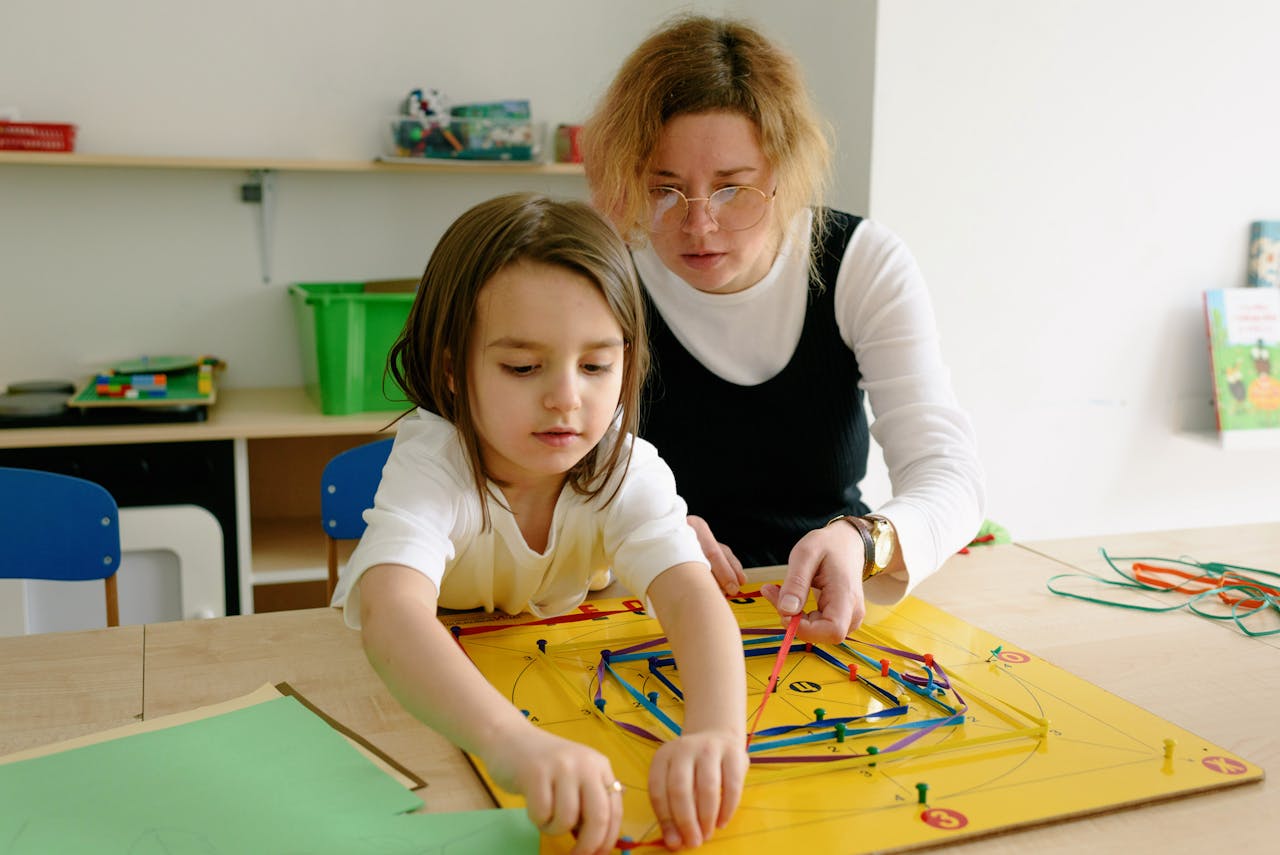
In pediatric care, that means guiding play-based activities, leading sensory integration exercises, and coaching fine-motor practice like grasping and handwriting. OTAs work directly with children day to day, which makes them central to how therapy actually reaches the child. After completing an accredited program and passing the national exam, an OTA earns the Certified Occupational Therapy Assistant (COTA) credential.
Where Pediatric OTAs Work
Pediatric OTAs practice across a range of settings, each serving a different group of children with different needs.
| Setting | Who They Serve | Focus |
| Schools | Students with disabilities | Fine-motor skills, sensory needs, classroom participation |
| Early intervention | Birth to age 3 | Developmental milestones like rolling, sitting, crawling |
| Hospitals and NICUs | High-needs and premature newborns | Inpatient pediatric and neonatal care |
| Outpatient clinics | Children referred for therapy | Sensory integration, motor development, individual sessions |
| Home and community | Children and their families | Carryover of skills into daily routines |
School-based work is among the most common, where OTAs help students with disabilities take part in the classroom. Early intervention focuses on the youngest children, often in the home, identifying and addressing developmental issues before they widen. Hospital and NICU roles serve the highest-needs cases, while outpatient clinics deliver individualized, often sensory-focused sessions.
What Pediatric OTAs Help Children With
Across settings, the day-to-day work tends to group into a few areas.
Fine and gross motor skills cover the coordination children need for handwriting, using utensils, dressing, and movement. Sensory processing work helps children who struggle to interpret sensory input, using sensory integration activities like swinging for vestibular input, deep-pressure techniques, and tactile play. Daily living skills build independence in feeding, dressing, and self-care. Social and emotional skills help children regulate their responses, manage transitions, and interact with peers, often through role-play and group activities.
The throughline is participation: helping each child take part in the ordinary occupations of childhood, learning, playing, and connecting with others.
Pediatric OTA Career Outlook and Salary
The career outlook is strong. OTAs earn a median wage of $68,340 as of May 2024, with the top 10% earning more than $86,930. Employment is projected to grow about 19% from 2024 to 2034, much faster than the average for all occupations.
Demand is driven by an aging population overall, but in pediatrics specifically by the emphasis on early intervention, rising developmental and autism diagnoses, and the steady need for school-based services. For context on the field and training in California, see OTA programs in California.
How to Become a Pediatric OTA
The path into pediatric work runs through general OTA training, with specialization coming from experience.
First, complete an OTA associate degree program accredited by the Accreditation Council for Occupational Therapy Education (ACOTE). Next, pass the national exam from the National Board for Certification in Occupational Therapy (NBCOT) to become a COTA, then obtain state licensure. CBD College’s OTA program is ACOTE-accredited and can be completed in about 77 weeks, with fieldwork built in. Pediatric specialization typically develops through fieldwork placements and on-the-job experience in pediatric settings, rather than through a separate entry credential. This walkthrough of OTA courses and curriculum explains what the program involves.
Start Your OTA Career
If helping children grow and thrive sounds like the work you want to do, the foundation starts with accredited OTA training. CBD College’s ACOTE-accredited Occupational Therapy Assistant program prepares you in about 77 weeks, with hands-on coursework and fieldwork that can open the door to pediatric practice. Visit the occupational therapy assistant program page to review start dates and request information.

