
Medical Imaging Careers: Sonography, MRI & Other Paths Compared
Published - October 21, 2026

Medical imaging careers fall into six main paths: diagnostic medical sonography, magnetic resonance imaging (MRI), radiography (x-ray), computed tomography (CT), nuclear medicine, and radiation therapy, with cardiovascular technology as a closely related seventh. Every one of them lists an associate’s degree as the typical entry point in the Bureau of Labor Statistics (BLS) Occupational Outlook Handbook, and May 2025 national median pay runs from $74,310 for cardiovascular technologists to $105,310 for radiation therapists. The two paths CBD College teaches sit near the top of that range: sonographers earn a median of $96,590 and MRI technologists a median of $95,480. The modality you choose sets your training length, your credentialing body, your radiation exposure, and your job market, so the comparison below starts with those variables.
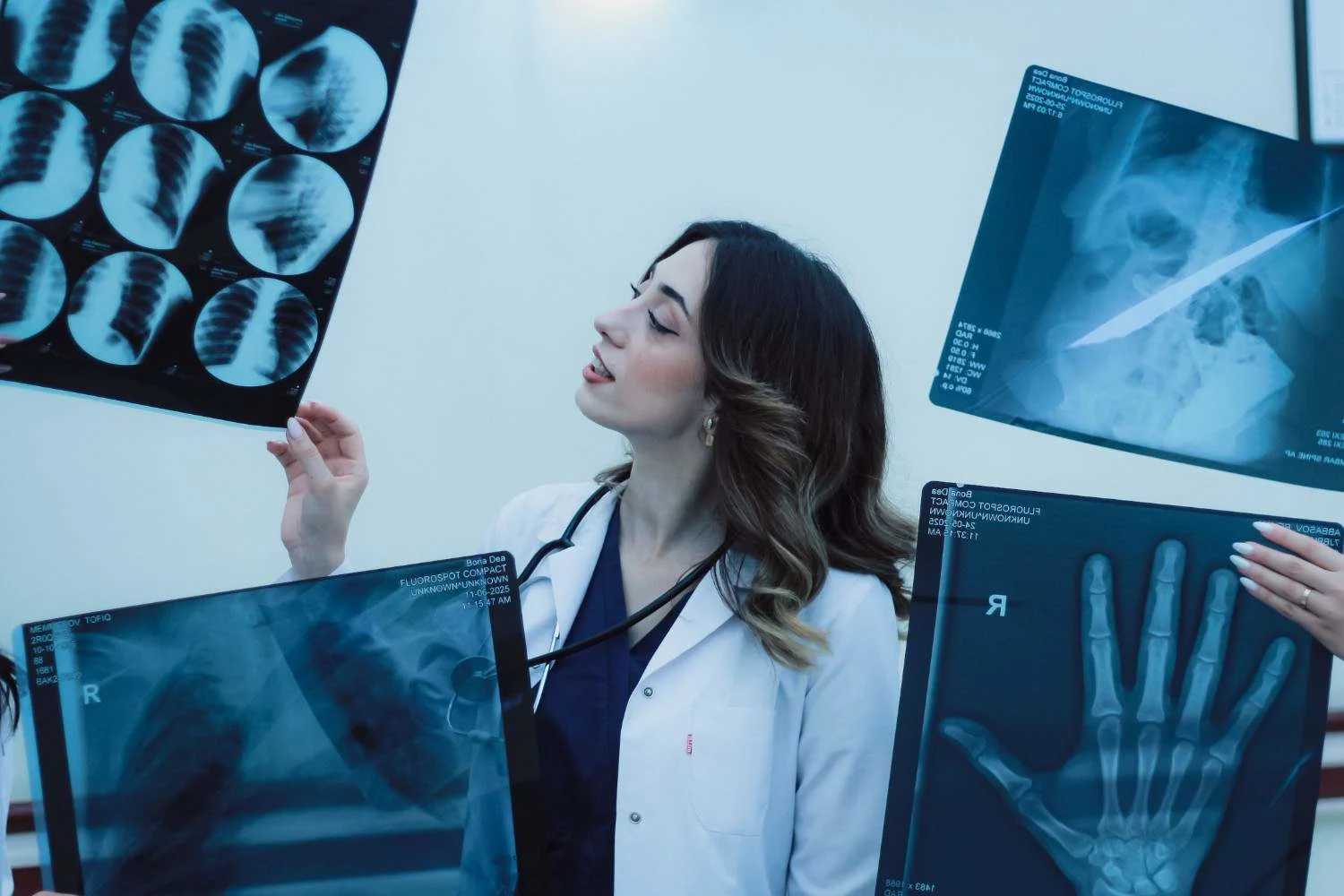
Medical Imaging Jobs Compared
Sonography has the fastest projected growth of any imaging occupation, radiation therapy and nuclear medicine pay the most, and radiography produces the most job openings each year. The table pulls every figure from the BLS Occupational Outlook Handbook, using May 2025 national median wages and 2025 to 2035 projections; openings are the BLS annual average over the decade.
| Modality | Credential | Entry education | Median pay (May 2025) | Growth (2025 to 2035) |
|---|---|---|---|---|
| Diagnostic medical sonographer | ARDMS; ARRT also offers Sonography | Associate’s degree | $96,590 | 14 percent, 6,000 openings a year |
| MRI technologist | ARRT (MRI) | Associate’s degree | $95,480 | 5 percent, combined with radiography |
| Radiologic technologist (x-ray) | ARRT (Radiography) | Associate’s degree | $80,110 | 5 percent, 15,300 openings a year with MRI |
| CT technologist | ARRT (CT), postprimary | Radiography credential first | Within radiologic technologist figure | Within radiologic technologist figure |
| Nuclear medicine technologist | NMTCB or ARRT (Nuclear Medicine) | Associate’s degree | $101,370 | 4 percent, 800 openings a year |
| Radiation therapist | ARRT (Radiation Therapy) | Associate’s or bachelor’s degree | $105,310 | 3 percent, 700 openings a year |
| Cardiovascular technologist | CCI | Associate’s degree or certificate | $74,310 | 4 percent, 3,400 openings a year |
For context, the BLS median for all occupations is $50,980, so every imaging path above pays well over the national midpoint with two years or less of postsecondary training.
Diagnostic Medical Sonographer
Diagnostic medical sonographers create images with high-frequency sound waves instead of radiation, which makes sonography one of the only imaging paths on this list with no ionizing radiation exposure for the technologist or the patient. The BLS describes the role plainly: sonographers operate special equipment to create images of the inside of the body, and the field is projected to grow 14 percent through 2035.
Sonography splits into specialties, including obstetric and gynecologic, abdominal, vascular, and cardiac (echocardiography). Cardiac sonographers examine the heart’s chambers, valves, and vessels, while vascular sonographers track blood flow through arteries and veins. CBD College’s overview of the different types of sonography breaks down what each specialty scans and who hires for it.
The main credentialing body is the American Registry for Diagnostic Medical Sonography (ARDMS), and the American Registry of Radiologic Technologists (ARRT) also lists Sonography and Vascular Sonography among its primary pathway disciplines. Sonography programs commonly hold programmatic accreditation through the Commission on Accreditation of Allied Health Education Programs (CAAHEP). In California, the pay premium is steep: BLS May 2025 data put the state median for sonographers at $128,530, with Los Angeles-Long Beach-Anaheim at $119,430.
MRI Technologist
MRI technologists produce detailed soft-tissue images using a strong magnetic field and radio waves, so the job centers on magnet safety rather than radiation safety. Before every scan, the technologist screens the patient for implants, metal fragments, and devices that the magnet could pull or heat, positions the patient, and may administer contrast agents under a physician’s order. CBD College’s post on the MRI primary pathway exam walks through how an MRI-focused program leads directly to the credential.
The direct route matters because MRI has two doors. The ARRT lets candidates earn the MRI credential through either the primary or postprimary eligibility pathway. Primary pathway candidates complete an ARRT-approved MRI program and sit for the exam without first becoming radiographers. Postprimary candidates already hold an ARRT, ARDMS, or NMTCB credential and add MRI on top. The BLS notes that MRI technologists often come from the postprimary side, most often from working as a radiologic technologist, but the primary pathway removes that detour.
Licensing is lighter for MRI than for x-ray. The BLS states that while most states license radiologic technologists, few states require licensure for MRI technologists, though employers typically require or prefer ARRT certification regardless. For California pay, BLS May 2025 data show a state median of $124,000 for MRI technologists and $109,800 in Los Angeles-Long Beach-Anaheim.
Radiologic Technologist and CT
Radiologic technologists, also called radiographers, perform x-ray exams of bones, the chest, and the abdomen, and the ARRT Radiography credential is the foundation most other radiation-based credentials build on. The BLS reports that most states require radiologic technologists to be licensed or certified, which usually means graduating from an accredited program and passing either a state exam or an ARRT exam.
CT is not a separate entry-level career. The ARRT classifies Computed Tomography as a postprimary discipline, meaning a technologist must already hold a supporting credential, typically Radiography, before adding CT. The same postprimary list includes Mammography, Bone Densitometry, and Cardiac Interventional and Vascular Interventional Radiography, so radiography functions as a hub from which technologists specialize. The BLS states that technologists may be certified in multiple specialties, which widens the jobs a radiographer can apply for.
Radiography produces the largest number of openings of any imaging field, about 15,300 a year when combined with MRI, but its national median of $80,110 trails sonography by more than $16,000. CBD College does not offer a radiography program; its imaging programs are sonography and MRI.
Nuclear Medicine, Radiation Therapy, and Cardiovascular Technology
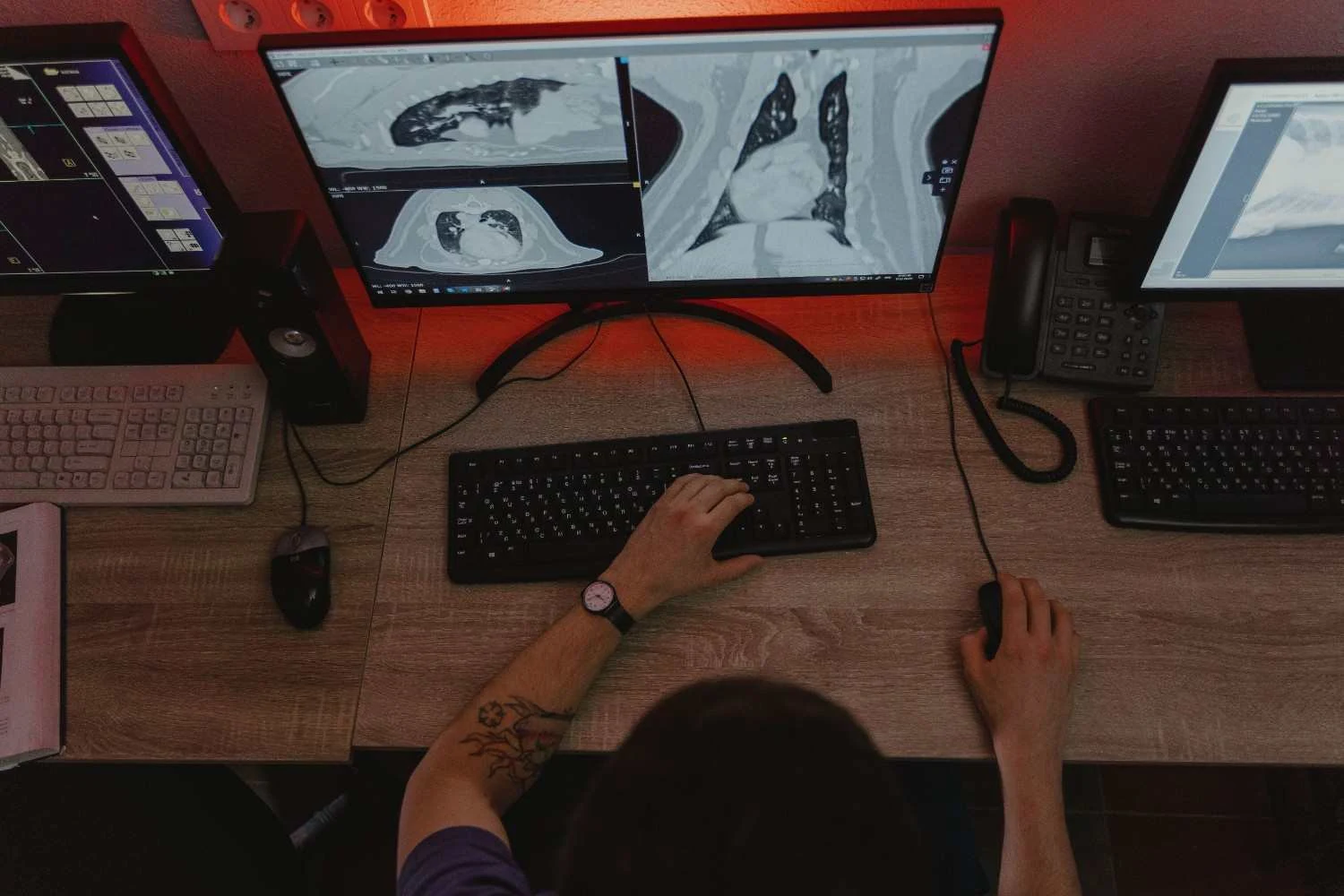
Nuclear medicine, radiation therapy, and cardiovascular technology round out diagnostic imaging careers, and they differ from the paths above in either the tool used or the purpose of the work.
Nuclear medicine technologists prepare radioactive drugs and administer them to patients so a gamma camera or PET scanner can image organ function rather than structure. The Nuclear Medicine Technology Certification Board (NMTCB) and the ARRT both credential the field, and the BLS notes that most become certified and some must be licensed. Pay is high at a $101,370 median, but the field is small, with about 800 openings a year.
Radiation therapists do not image at all. They administer doses of radiation to patients with cancer or other serious diseases, following a treatment plan from a radiation oncologist. The BLS lists an associate’s or bachelor’s degree as typical, and Radiation Therapy is an ARRT primary pathway discipline. The $105,310 median is the highest in the group, but growth of 3 percent and roughly 700 openings a year make it the tightest job market.
Cardiovascular technologists and technicians conduct tests and assist in procedures involving the heart or lungs, from electrocardiograms to cardiac catheterization support. Cardiovascular Credentialing International (CCI) is the main credentialing body. The BLS median of $74,310 is the lowest of the seven paths, and the BLS accepts an associate’s degree or a certificate as entry education. Cardiac sonography overlaps this field and pays at the sonographer rate; CBD College explains the route in its post on how to become a cardiac sonographer.
How to Choose Among Diagnostic Imaging Careers
Choose by radiation exposure, patient contact, training length, and the balance between pay and openings, in that order, because those four factors separate the modalities more than anything else.
- Radiation exposure. Sonography and MRI involve no ionizing radiation. Radiography, CT, nuclear medicine, and radiation therapy do, with shielding and dose monitoring built into the job.
- Patient contact and physical demand. Sonographers work hands-on with each patient for the full exam and hold a transducer at awkward angles, so repetitive strain is an occupational concern. MRI technologists spend more time at a console outside the scanner room. Radiographers move and position patients constantly, including trauma patients.
- Training length and licensing. Every path in the table lists an associate’s degree as typical entry, and radiation therapy sometimes expects a bachelor’s. Radiography carries state licensure in most states; MRI does in few. CT, mammography, and interventional work require a prior credential, so they add a year or more to the timeline.
- Pay versus openings. Radiation therapy and nuclear medicine pay the most but post the fewest openings. Sonography combines a $96,590 median with the fastest growth in imaging. Radiography pays the least of the radiation-based paths but hires the most.
- Travel options. Sonography and MRI both support travel assignments because the ARDMS and ARRT credentials are national rather than state-specific.
For a direct comparison of the two paths available at CBD College, the post on the difference between a sonographer and an MRI tech lays the daily work side by side.
Start Your Imaging Career at CBD College in Los Angeles
If you have narrowed your choice to sonography or MRI, CBD College offers both programs at its Los Angeles campus. The Diagnostic Medical Sonography program trains students for a field with a $128,530 California median and ARDMS credentialing as the standard. The MRI program follows the ARRT primary pathway, so graduates can sit for the MRI exam without completing radiography first. Open either program page to review admission requirements and request information, and an admissions advisor can help you weigh which modality fits your goals.

